Home › Drywall With Insulation and Vapor Barriers
Reliable, professional insulated drywall installation in Savannah, GA from Savannah Drywall Repair. Contact us today for a free on-site estimate.
Savannah Drywall Repair provides professional insulated drywall installation throughout Savannah, GA, Georgia and the surrounding area. Our licensed, insured crew delivers safe, clean, on-time work with a free estimate before anything begins. Call (912) 914-2791 or request your free quote.
Insulated Drywall Installation for Savannah Homes and Businesses
Savannah Drywall Repair installs drywall, insulation, and vapor barriers as a single integrated system, not three separate jobs. In Savannah, with high humidity most of the year and mild winters, that system has to be designed so walls can breathe enough to dry out while still blocking heat and moisture transfer. We look at your specific space, such as a historic home near the Historic District, a newer subdivision in Pooler, or a commercial unit in midtown, and choose materials and details that work for our local climate instead of just following a generic national standard.
For most customers, insulated drywall installation is the right choice when you are finishing an addition, upgrading older walls that have poor insulation, or turning a garage or porch enclosure into conditioned living space. Where possible, we evaluate the existing framing from the inside, check for prior moisture problems, and confirm what insulation is already in place. Then we design a wall assembly that controls temperature and humidity, meets Georgia energy code, and makes sense for the room type and use.
Savannah Drywall Repair handles the full process in-house, which means one crew is responsible for the insulation, vapor control, and drywall work. That is important, because many wall failures come from small gaps between trades, like insulation not fitting tight against outlets, a vapor retarder cut around plumbing then never sealed, or drywall screws puncturing an air barrier. Our approach is to treat the wall as a single system so there are no loose ends and no surprises later.
How We Install Drywall, Insulation, and Vapor Barriers Step by Step
For a typical insulated drywall installation, we start by prepping the framing. We check studs for plumb and alignment, pull old fasteners, and address any visible mold spots with appropriate cleaning and sealing products before anything is closed up. If this is a remodel, we photograph any plumbing or wiring routes for future reference before covering them.
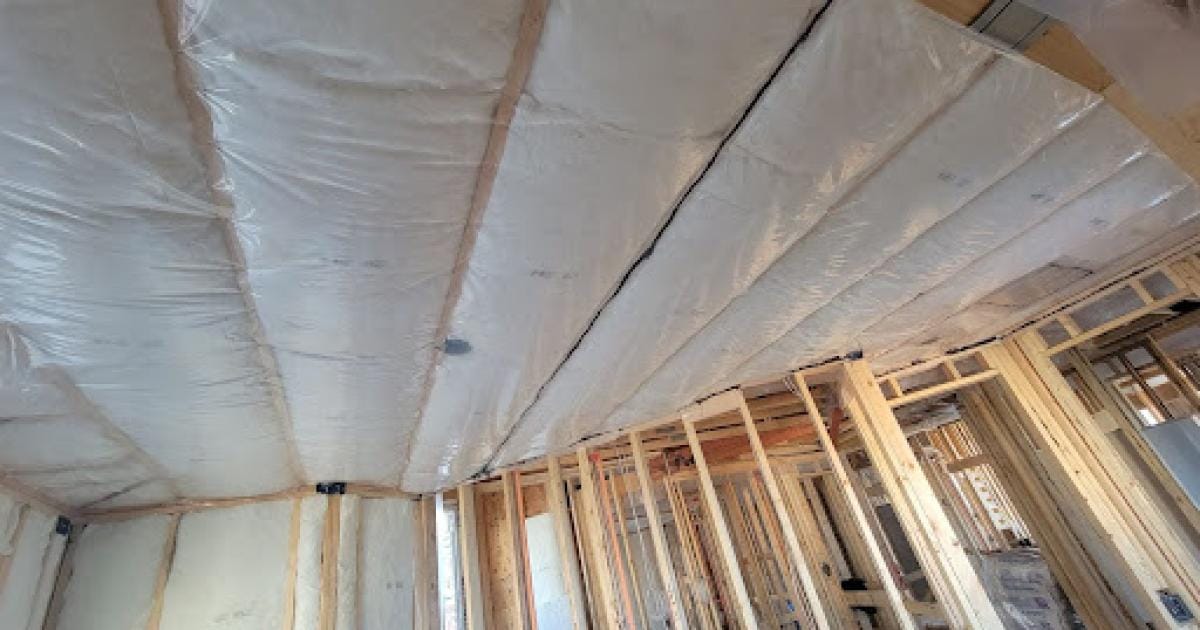
Next we install insulation. For most interior and exterior walls in Savannah, we use fiberglass or mineral wool batts sized to the stud cavity. Each batt is cut to fit snugly from top plate to bottom plate and around electrical boxes and pipes. In certain cases, such as walls along noisy streets or between units in multi family buildings, we recommend higher density sound damping products. For ceilings below vented attics, we focus on full coverage to the corners and consistent depth around recessed lights and access hatches.
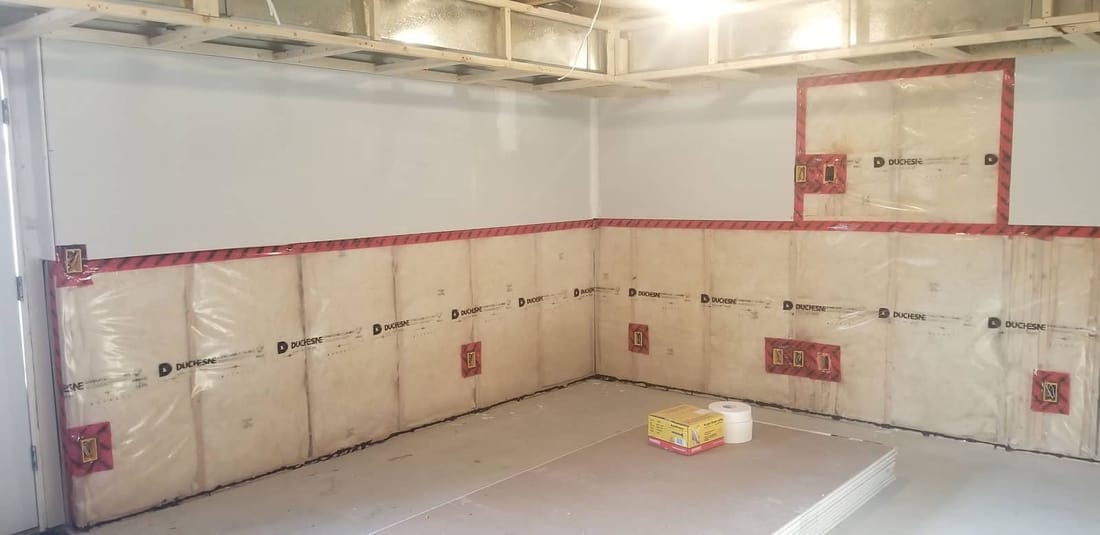
After insulation is in place, we handle vapor and air control. In our climate, an interior polyethylene sheet is usually a bad idea because it can trap moisture. Instead, we typically use a smart vapor retarder, sealed airtight around penetrations, or we rely on a carefully detailed air barrier with vapor retarding drywall and paint assemblies for many interior applications. Critical areas like band joists, wall to ceiling transitions, and penetrations for HVAC lines or hose bibs are sealed with compatible tapes and sealants.
Then we hang the drywall. We choose 1/2 inch or 5/8 inch board depending on span, fire rating, and sound goals. Sheets are hung horizontally on walls whenever possible, with seams staggered and edges landing on framing. We use the correct length screws so we do not overly compress insulation or damage any air barrier behind the board. Finally, we tape, mud, sand, and prime, watching for any signs of fastener pops or poorly supported seams that could telegraph later.
Material Options and What Works in Savannah’s Humid Climate
Not every insulation and vapor barrier combination is appropriate for Savannah. Our summers are hot and humid, and air conditioning runs for long stretches. That means vapor drive often goes from outside to inside, not the other way around, and poorly chosen interior vapor barriers can lock moisture into the wall instead of keeping it out.
Common insulation options we use include fiberglass batts, mineral wool batts, and in some situations closed cell spray foam. Fiberglass batts are cost effective and work well when installed carefully with full cavity contact. Mineral wool resists moisture better, offers higher fire resistance, and performs a bit better acoustically, which makes it useful for party walls, multifamily units, and home offices. In basements or below grade spaces around Savannah, where ground moisture is an issue, we often recommend rigid foam on the foundation wall paired with a framed wall and drywall to move the dew point away from the drywall surface.
For vapor control, we tend to avoid simple plastic sheeting. Instead, we use smart vapor retarders that slow moisture flow in winter and open up in summer so walls can dry toward the interior. In some applications, a vapor retarding primer and specific drywall products combined with an exterior housewrap and properly detailed siding are enough to manage moisture. We always look at what is on the outside of your wall, including brick veneer, stucco, or siding, because that affects how the whole system dries. Savannah Drywall Repair will walk you through why one assembly is chosen over another in plain language so you know what is behind your walls and why it matters.
Costs, Estimates, and What Drives the Price of Insulated Drywall Installation
Customers in Savannah often ask why two rooms that look similar can have different prices for insulated drywall installation. The main cost drivers are access, existing conditions, material choices, thickness and type of drywall, and required code or HOA standards.
Access can change the labor time significantly. Wide open framing in a new addition is more straightforward than weaving insulation and drywall into a tight, existing room in an older house with out-of-square framing. Working on upper floors or tight stairwells can add setup and handling time. If we are repairing or upgrading within a finished home, protecting floors, furniture, and finishes and controlling dust are part of the cost.
Existing conditions are another major factor. If we open walls and find past water damage, active roof or siding leaks, or mold, that has to be addressed before insulation and drywall go back in. In parts of Savannah near marshland or in lower lying neighborhoods, we often find moisture intrusion at bottom plates and window openings. Repairing framing, treating mold, and improving flashing details adds cost up front but prevents repeat failures.
Material choices also affect price. Higher density mineral wool, acoustic assemblies, fire rated type X drywall, and smart vapor retarders cost more than basic materials, but they are worth considering in specific situations like garages with living space above, shared walls in townhomes, or short term rental units that need better sound control. Savannah Drywall Repair provides written estimates that break out insulation, vapor control components, and drywall so you can see where your money is going and adjust options if needed.
Local Codes, Permits, and HOA Considerations in the Savannah Area
Insulated drywall installation touches both energy efficiency and life safety, so it often falls under local building codes. For full gut renovations, additions, or garage conversions in Savannah and Chatham County, permits are typically required, and inspectors will look closely at insulation R values, fire separation between garage and living space, and in multifamily buildings, the required fire rated assemblies between units.
Savannah Drywall Repair coordinates with local code requirements so our wall and ceiling assemblies meet or exceed Georgia Energy Code and local amendments. That includes using the correct R value for exterior walls and ceilings, complying with fire separation at attached garages, and following rated assemblies for townhouse separations when applicable. If your project already has an architect or engineer, we work from their specified details and communicate with them if field adjustments are necessary.
Many HOAs in neighborhoods around Savannah, Pooler, Richmond Hill, and nearby communities are less concerned with what is inside your walls and more focused on exterior appearance and noise during work hours. However, if your insulated drywall installation involves changing exterior walls, adding windows, or altering exterior finishes, HOA approval may be needed before we start. We provide written scopes of work and simple diagrams if your HOA requires documentation for interior upgrades that may affect penetrations through exterior walls or ceilings.
For historic homes or properties in designated historic districts, you may face additional oversight on penetrations, window replacements, and exterior wall assemblies. While the drywall and insulation are inside, how the wall as a whole deals with moisture is critical in older masonry buildings. We use assemblies that reduce the risk of trapping moisture in historic brick or stucco, which helps protect both the structure and your investment.
Common Issues, Warning Signs, and How We Prevent Future Problems
In this climate, poor insulated drywall installation often shows up as musty odors, peeling paint, nail pops, or soft areas along baseboards a year or two after a renovation. Sometimes you will see staining at ceiling corners or around outlets where humid air is leaking and condensing inside the wall. In extreme cases, particularly on shaded north walls or near bathrooms, mold can form behind the drywall and stay hidden until a major issue forces the wall open.
Savannah Drywall Repair approaches every job with these failure patterns in mind. We look for signs of past leaks in rooflines, window headers, and plumbing runs before closing up a wall. Where we see risk, we suggest targeted upgrades such as better flashing, improved bath fan routing to the exterior, or additional air sealing around mechanical penetrations. Inside the wall, we avoid compressing batts, leaving gaps, or running insulation behind recessed lights that are not rated for contact where that would be unsafe or reduce performance.
We also pay attention to mechanical systems. Oversized air conditioners and poorly balanced ductwork are common in this area and can increase humidity problems if walls are not detailed correctly. While we are not HVAC contractors, we can point out issues that may need attention, such as ducts running through hot attics without insulation or missing air sealing around returns and supplies in newly finished rooms.
Before we leave, we check that drywall seams are solid, fasteners are properly set, and that the wall or ceiling surface is ready for primer and paint. We review any areas that may require special care, such as tiled shower walls, kitchen backsplashes, or fireplace surrounds, and explain how our work interfaces with your tile, trim, or cabinet contractors. Our goal is not only to give you a smooth finished surface, but a wall assembly that will perform quietly in the background for many years without surprises.